Skip to content


A kitchen island is often the busiest spot in the whole kitchen — prep space, dining spot, homework table, and gathering point all at once. That makes it easy for an island to either sit completely bare or become a dumping ground for everyday clutter. The right balance of lighting, styling, and a few functional touches can make a kitchen island feel finished and intentional, without getting in the way of how you actually use it every day. These 10 kitchen island decor ideas focus on practical, realistic styling that works whether your island is the centerpiece of an open kitchen or a compact addition to a small apartment layout.
1. Add Pendant Lighting Above the Island
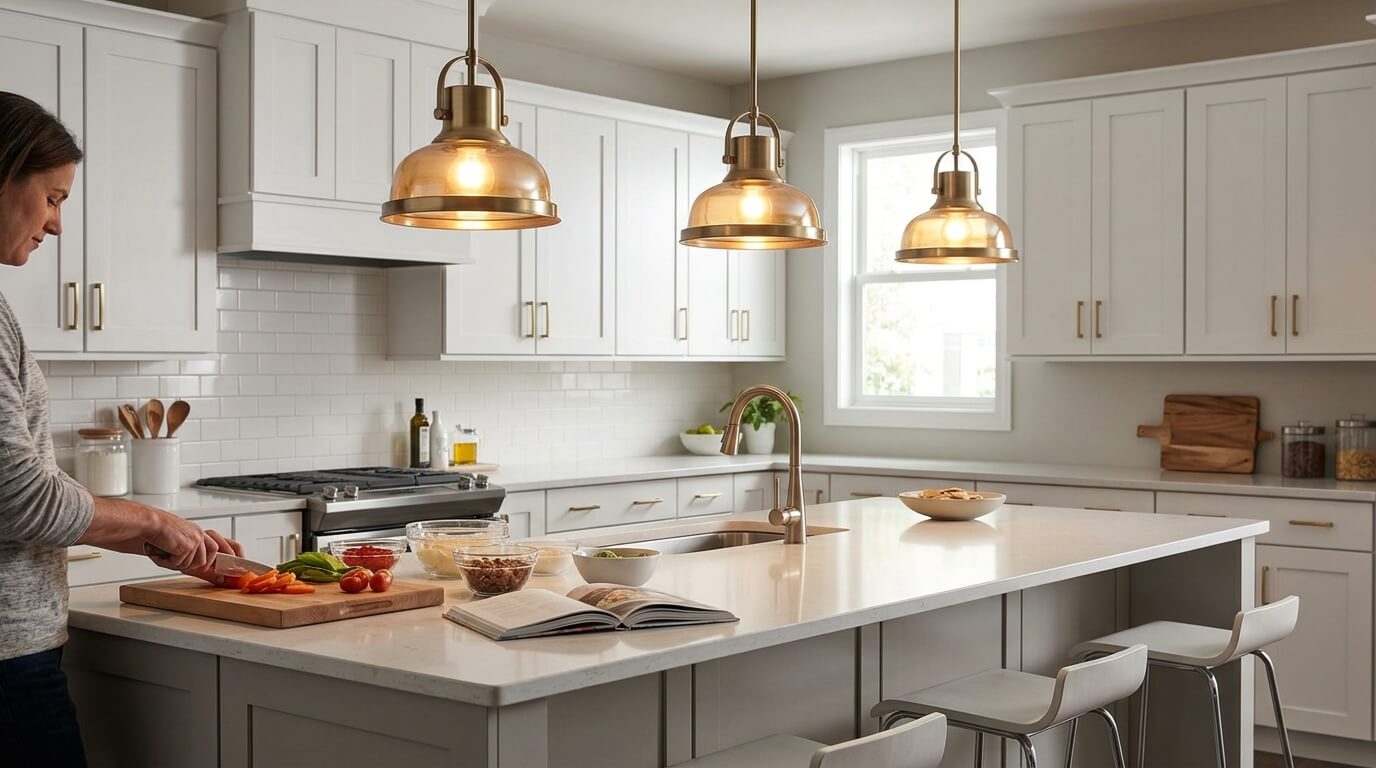
Pendant lighting is one of the simplest ways to make a kitchen island feel like a designed feature rather than just a countertop. Hung at the right height, pendants provide focused task lighting for food prep while also adding visual warmth to the space. For most islands, two to three pendants spaced evenly work well, hung roughly 30 to 36 inches above the countertop surface. For more detailed pendant lighting height guidelines, This Old House’s lighting guide offers practical installation recommendations.Choose a finish that complements your cabinet hardware or faucet for a more cohesive look. If you’re renting and can’t change hardwired fixtures, plug-in pendant lights are a practical alternative that still create the same layered lighting effect.
2. Use a Bowl or Tray to Style the Countertop
An island surface that’s completely bare can feel unfinished, but one with too many scattered items feels cluttered. A single large bowl or tray creates a defined spot for everyday items — fruit, keys, mail — while keeping the rest of the surface clear for actual use. A wooden or ceramic tray also works well for grouping smaller decorative objects, like a candle and a small plant, into one visually organized cluster rather than letting them spread across the whole counter.

3. Add a Few Bar Stools That Fit the Space
Bar stools do more than provide seating — they help define the island as a functional gathering spot rather than just a countertop. Choose stools sized appropriately for your island’s height and the amount of walking space around it, since oversized stools can make the area feel cramped. For a small kitchen, backless stools or stools with slim profiles take up less visual and physical space while still providing comfortable seating for quick meals or conversation.
4. Bring in a Cutting Board or Wood Accent
A large wooden cutting board, even when not actively in use, adds warmth and texture to an island that might otherwise feel cold or purely functional. Lean it upright against a stand or lay it flat with a small stack of cookbooks for a styled, lived-in look. This works particularly well on islands with white, gray, or stone countertops, where the wood tone adds contrast and a sense of natural material.
5. Add Fresh Greenery or a Small Plant
A small plant or a simple vase of fresh greenery brings life to a kitchen island without requiring much maintenance or space. Herbs in small pots do double duty, functioning as both decor and something you’ll actually use while cooking. Keep the plant appropriately scaled to your island’s size — one modest arrangement usually works better than several small pots scattered across the surface.

6. Use the Island for Extra Storage
If your island includes cabinets or open shelving underneath, this space can significantly expand your kitchen’s storage without adding separate furniture. Open shelving works well for frequently used items like cookbooks, serving bowls, or baskets of produce, while closed cabinets are better suited to small appliances and less attractive essentials. For tips on organizing whatever you store here, see our Kitchen Cabinet Organization Ideas guide, which covers practical systems for keeping cabinet storage genuinely functional.
7. Add a Fruit Bowl or Everyday Centerpiece
A simple fruit bowl serves as both a practical storage solution and an easy, ever-changing centerpiece. Unlike purely decorative objects, it earns its place on the island by actually being useful day to day. Choose a bowl with enough visual weight to anchor the center of the island without overwhelming the surface, and resist the urge to add several additional decorative objects around it.

8. Mix Metals and Textures Thoughtfully
A kitchen island surrounded by all-matching metal finishes can feel flat, while mixing two complementary metals — brass accents with black hardware, for example — adds depth without looking disjointed. Extend this thinking to other materials too: pair a stone or quartz countertop with wood accents, woven baskets, or a textured runner to avoid the space feeling cold or overly uniform.
9. Keep the Surface Mostly Clear — A Simple Kitchen Island Decor Idea
The most functional islands usually have the least amount of permanent decor on them, since the surface needs to stay available for actual food prep and daily tasks. Aim to keep roughly two-thirds of the island’s surface clear at any given time, reserving decor for one end or a single grouped area. This also makes the island feel more intentional rather than cluttered, since the few decorative pieces that are there have room to actually be noticed.

10. Add a Runner or Placemat for Texture
A table runner or set of placemats isn’t just for dining tables — a narrow runner down the center of an island adds softness and texture to an otherwise hard, flat surface. It also provides a defined base for styling a centerpiece or a stack of cookbooks. Choose a washable, durable fabric given how much activity happens on an island surface, and keep the color within your kitchen’s existing palette rather than introducing a competing accent.
How to Style a Kitchen Island Like a Designer
Start with lighting, since it has the biggest impact on how the island feels both functionally and visually. From there, add one grouped styling moment — a tray with a plant and a candle, or a cutting board leaned against a stand — rather than scattering several small objects.
If you use the island for dining, make sure the seating is appropriately scaled to the space, and keep the majority of the surface clear for actual use. For more on arranging the rest of the kitchen around your island, our Living Room Furniture Arrangement Ideas guide covers the same core principles of balance and walking space that apply here too.
Kitchen Island Decor Mistakes to Avoid
Overcrowding the surface An island covered in small decorative objects loses its primary function as a workspace. Keep most of the surface clear.
Choosing oversized bar stools Stools that are too large for the space make it difficult to move around the island comfortably. Measure the walking clearance before buying.
Ignoring lighting A dark or poorly lit island feels unfinished even if everything else is styled well. Pendant lighting makes a significant difference.
Using decor with no function Purely decorative objects that serve no purpose are the first things to get pushed aside during actual use. Favor pieces like a fruit bowl or cutting board that do double duty.
Letting everyday clutter take over Mail, keys, and random items can quickly overwhelm an island with no defined spot for them. A single tray or bowl helps contain this clutter intentionally.
Final Thoughts
These kitchen island decor ideas prove an island doesn’t need to be either completely bare or covered in decor to feel finished.. The right lighting, a few functional styling choices, and appropriately scaled seating can make it feel like a genuine design feature while still working hard for everyday tasks. Start with lighting and one grouped styling moment, then adjust based on how you actually use the space. The best kitchen island decor ideas are the ones that still leave room for you to actually cook.