Skip to content


These small bedroom decor ideas prove a compact room doesn’t have to feel cramped or compromised . The key isn’t fitting less into the room — it’s making thoughtful choices about furniture scale, color, storage, and layout so the space works with you instead of against you. These 10 small bedroom decor ideas focus on practical changes that make a compact bedroom feel more open, without requiring a renovation or a complete furniture overhaul.
1. Choose a Bed Size That Fits the Room
The bed is usually the largest piece of furniture in a bedroom, so its size has an outsized effect on how the whole room feels. A bed that’s slightly too large for the space can make even a well-decorated small bedroom feel cramped. Measure the room first, and leave at least 24 to 30 inches of clearance on at least one side of the bed for comfortable movement. If space is genuinely tight, consider a smaller bed size than you might default to, rather than squeezing in the largest bed the room can technically fit.
2. Use Furniture With Visible Legs
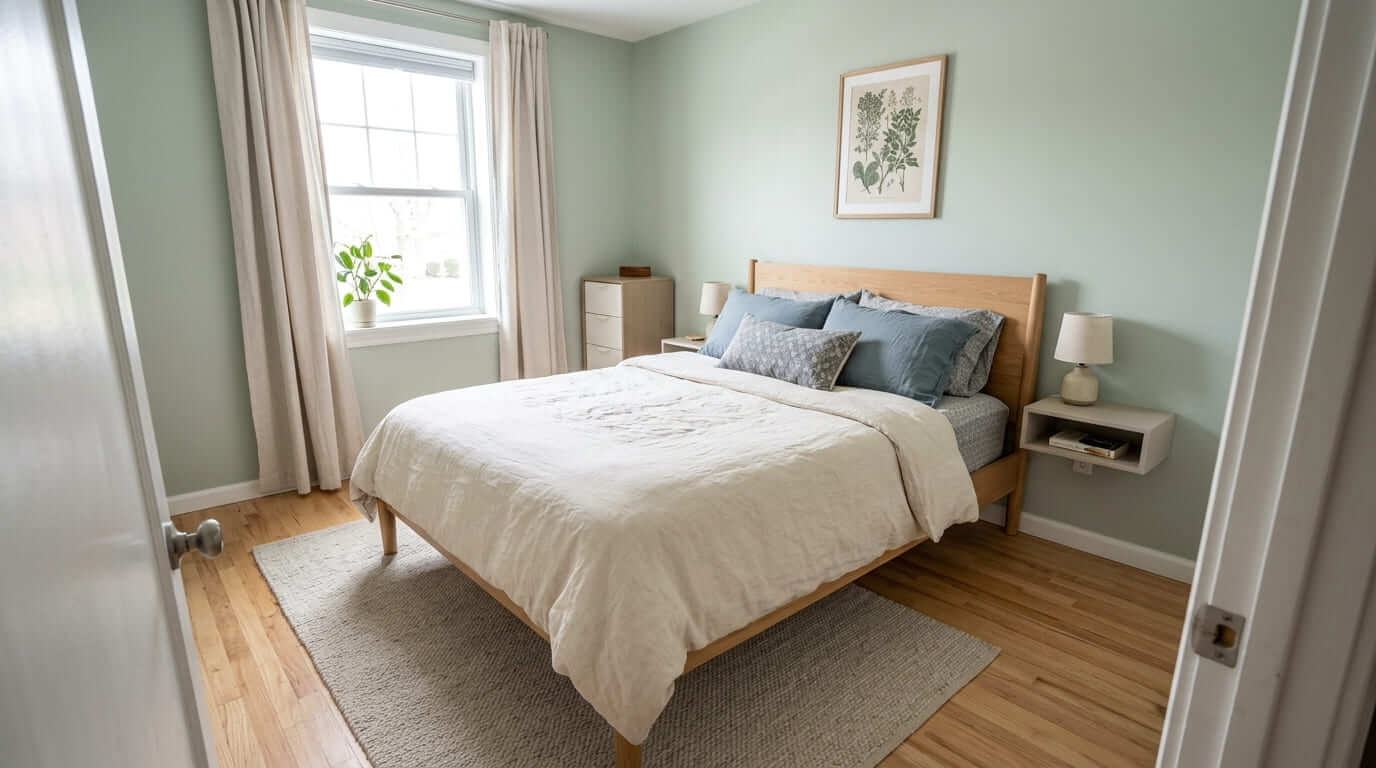
Furniture that sits flush on the floor reads as visually heavier than it actually is, which can make a small bedroom feel more crowded. Pieces with raised, visible legs let the eye — and the light — travel underneath, creating a sense of open floor space even when the room’s actual footprint hasn’t changed. This applies to the bed frame, nightstands, and any seating in the room. It’s a simple filter to apply when shopping secondhand or budget furniture for a small space.

3. Keep the Color Palette Light
Light, warm neutrals — cream, soft white, pale beige — reflect more natural light and make a small bedroom feel brighter and more open than darker or more saturated colors. This doesn’t mean the room needs to be sterile or cold. Adding warmth through natural wood, soft textiles, and one or two muted accent colors keeps a light palette from feeling flat. For more color direction specifically for a calming result, see our Calming Bedroom Colors for Adults guide.
4. Use a Mirror to Reflect Light
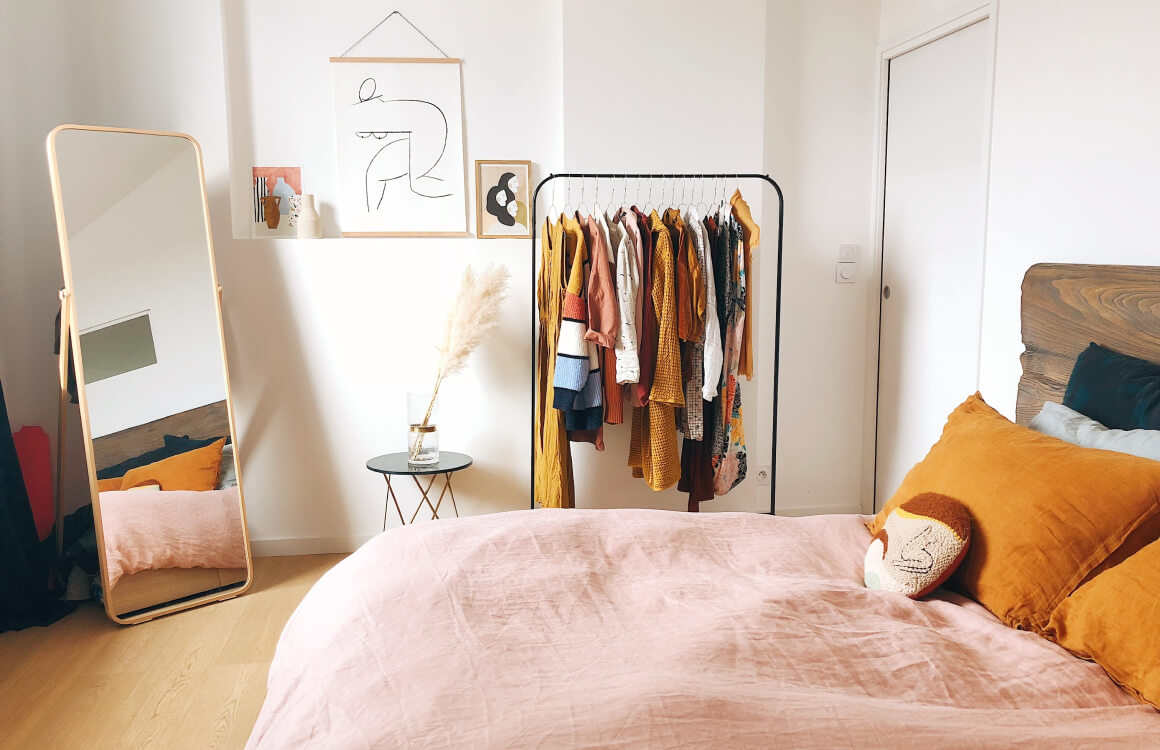
A mirror is one of the simplest ways to make a small bedroom feel larger. Positioned opposite a window, it reflects natural light back into the room and can create the visual impression that the space extends beyond its actual walls. A single large mirror usually has more impact than several small decorative ones. If you’re renting, a leaning floor mirror achieves the same effect without any wall-mounting hardware.
5. Choose Multifunctional Furniture
In a small bedroom, furniture that does more than one job is especially valuable. A bed frame with built-in storage drawers, an ottoman that doubles as extra seating and storage, or a nightstand with a drawer all help the room function without adding extra pieces. Before buying anything new, ask whether a multi-purpose version of that piece exists first — it’s often a more efficient use of limited square footage than adding a separate item for each need.

6. Use Vertical Space for Storage
When floor space is limited, the walls become valuable real estate. Tall, narrow shelving, wall-mounted hooks, and floating shelves add storage and display space without taking up any additional floor area. This is one of the most underused strategies in small bedroom decorating, since it’s easy to default to wide, low furniture that eats up floor space a small room genuinely can’t spare.
7. Keep Nightstands Small and Simple
A pair of oversized nightstands can eat up a disproportionate amount of floor space in a small bedroom. A slim, compact nightstand — or even a small wall-mounted shelf in place of a traditional nightstand — frees up floor space while still providing a spot for a lamp and a few essentials. If floor space is extremely tight on one side of the bed, consider using only one nightstand rather than a matching pair on both sides.

8. Hang Curtains Higher and Wider
Mounting the curtain rod closer to the ceiling, rather than directly above the window frame, draws the eye upward and makes the room feel taller than it is. Extending the rod a few inches beyond each side of the window frame has a similar effect on perceived width. This is a low-cost change — most curtain rods are adjustable — and it works particularly well paired with floor-length curtains for one continuous vertical line.
9. Use Under-Bed Storage
The space under the bed is one of the most overlooked storage areas in a small bedroom. Stackable bins or a bed frame with built-in drawers can hold out-of-season clothing or extra linens, freeing up closet and dresser space for everyday items. Choose low-profile storage containers that fit your bed’s actual clearance, and group similar items together so the space stays organized rather than becoming a catch-all.
10. Keep Small Bedroom Decor Minimal but Personal
A small bedroom doesn’t need to be minimalist to feel calm, but it does benefit from restraint. A few meaningful pieces — one piece of artwork, a small plant, a couple of framed photographs — create personality without adding visual clutter. Group smaller objects together rather than spreading them across every surface, and leave some genuinely empty space. In a small room, that empty space does real work, giving the eye somewhere to rest.

How to Make a Small Bedroom Feel Bigger
These small bedroom decor ideas work best when you start with the changes that have the biggest visual impact a properly sized bed, a light color palette, and a large mirror positioned to reflect natural light. From there, use vertical space for storage instead of wide furniture, choose pieces with visible legs, and keep nightstands and other furniture appropriately scaled to the room. The goal isn’t to make the room look empty — it’s to create enough visual breathing room that the furniture and decor don’t compete for attention.
Small Bedroom Decor Mistakes to Avoid
- Choosing furniture that’s too large for the room Always measure the space and the furniture before buying a bed, dresser, or nightstand.
- Using heavy, floor-length furniture everywhere Pieces that sit flush on the floor can make the room feel visually denser than it is. Mix in at least a few pieces with visible legs.
- Choosing a dark, saturated color palette Dark colors can work as accents, but covering a small bedroom entirely in a dark, saturated color can make the space feel smaller and heavier.
- Ignoring vertical space Floor space is limited in a small bedroom, but wall space rarely is. Underusing it is one of the most common missed opportunities.
- Overcrowding nightstands and surfaces A nightstand covered in items doesn’t feel cozy — it feels cluttered. Keep surfaces to a few intentional objects. For more on keeping wall and surface decor intentional, see our Bedroom Wall Decor Ideas guide.