Skip to content


Decorating a small living room can be challenging. You want the space to feel comfortable and stylish, but too much furniture or decor can quickly make it feel crowded. The good news is that you don’t need a large room to create a beautiful living space. The right furniture, colors, lighting, layout, and decorative details can make a small room feel more open while still keeping it warm and inviting. These small living room decor ideas focus on practical ways to use the space you already have without making it feel overcrowded.
1. Choose Furniture That Fits the Room
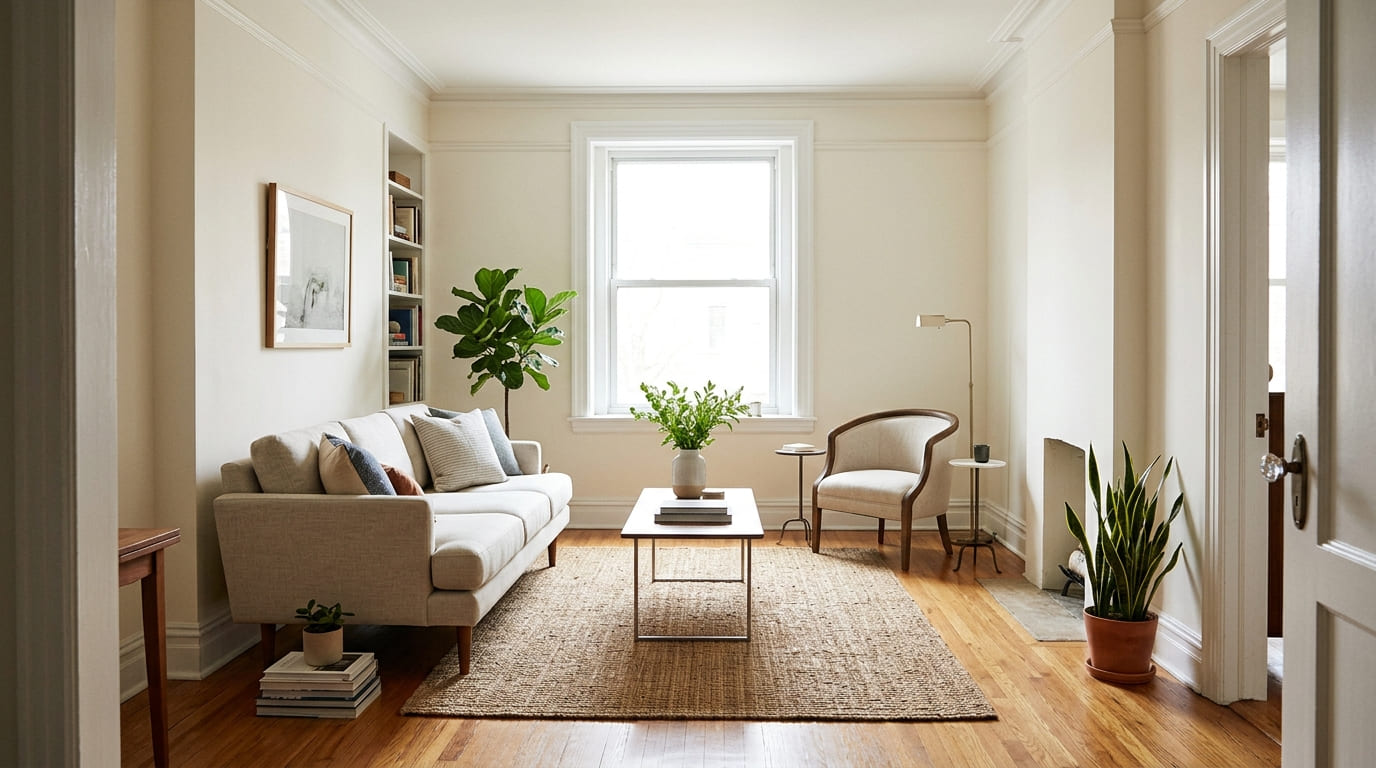
Furniture size has a big impact on how a small living room feels. An oversized sofa may look comfortable, but if it takes up most of the available floor space, the room can quickly feel cramped. Instead, look for furniture with proportions that suit the room. A compact sofa, loveseat, or smaller armchair can provide comfortable seating while leaving enough space to move around. Don’t forget about the depth of the furniture either. A sofa with a slimmer profile can sometimes make a bigger difference than simply choosing a shorter one.
2. Keep the Color Palette Light and Cohesive
Light colors can help a small living room feel brighter and more spacious. Soft white, cream, beige, light gray, and other gentle neutral shades can reflect natural light and create a more open feeling. You don’t have to make everything the same color. Add warmth with natural wood, soft brown, muted green, or a few darker accents. The key is to keep the overall palette cohesive. Too many contrasting colors can make a small room feel visually busy.

3. Use Vertical Space Instead of More Floor Space
When your floor area is limited, your walls become valuable storage and decorating space. Tall bookcases, wall-mounted shelves, vertical artwork, and floating shelves can give you places to display books and decor without taking up much floor space. You can also hang artwork slightly higher or use tall curtains to draw the eye upward. These simple changes can make the room feel taller while keeping the floor more open. The goal is to make the walls work harder so you don’t have to fill the floor with furniture.

4. Add a Mirror to Reflect Light
A well-placed mirror can make a small living room feel brighter and more open. Try placing a larger mirror opposite or near a window so it can reflect natural light. You can also use a mirror to reflect an attractive part of the room, creating more visual depth. The placement matters more than simply having a mirror. A random mirror added to the wall won’t necessarily make the room feel larger. Choose a size and position that works with your existing layout.

5. Choose the Right-Size Rug
A rug can help visually connect the seating area, but size matters. A rug that’s too small can make the furniture look disconnected and may actually make the room feel more fragmented. Whenever the layout allows, choose a rug large enough to visually connect the main seating pieces. This creates a more cohesive zone and helps the room feel intentional. Stick with a pattern or color that works with the rest of your decor rather than introducing too many competing details.
6. Keep the Main Walking Path Clear
A small room needs breathing space. Before adding another chair, table, basket, or decorative piece, consider how people move through the room. If furniture blocks the main pathway, the space will feel more cramped. Try positioning larger furniture along the edges when possible and leave the main walking areas open. Sometimes removing one unnecessary piece can improve a small living room more than adding another decorative item.

7. Choose Furniture That Does More Than One Job
Multifunctional furniture is especially useful when space is limited. An ottoman can provide extra seating, act as a footrest, and sometimes provide hidden storage. Nesting tables can give you additional surfaces when needed and be tucked away when they’re not being used. Storage benches, compact side tables, and furniture with built-in storage can also reduce clutter without requiring additional pieces. Instead of asking, “What else can I add?” ask, “Can this piece do more than one job?”
8. Layer the Lighting
Good lighting can completely change how a small living room feels. Rather than relying on one ceiling light, combine different sources such as a floor lamp, table lamp, wall light, or other warm accent lighting. During the day, make the most of natural light by keeping windows as unobstructed as possible. In the evening, layered lighting can create a softer and more comfortable atmosphere. If you like darker, richer interiors, you can also explore these moody living room ideas for inspiration on using warm lighting and layered textures.

9. Hang Curtains Higher and Keep Them Light
Curtains can influence how tall a room appears. Instead of placing the curtain rod directly above the window, consider mounting it higher and allowing the curtains to fall all the way toward the floor. This draws the eye upward and can make the ceiling feel taller. Lightweight or sheer curtains can also allow more natural light into the room while providing softness and privacy. Choose a color that works with your existing palette rather than adding another strong visual element.
10. Keep Decor Intentional
A small living room doesn’t need to be completely minimal. It simply needs to be intentional. Instead of filling every shelf, table, and corner, choose a few pieces that add personality. A plant, artwork, books, textured cushions, or a decorative object can make the space feel finished without creating clutter. Leave some surfaces and areas open. Empty space is not wasted space in a small room—it helps everything else stand out. For more general inspiration on making a room feel cozy and stylish, explore these room decor ideas.

How to Make a Small Living Room Feel Bigger
You don’t need to completely redesign your room to make it feel more spacious. Start with the changes that have the biggest visual impact:
- Choose furniture that fits the room.
- Keep the main walking path clear.
- Use a light and cohesive color palette.
- Add a strategically placed mirror.
- Take advantage of vertical wall space.
- Use furniture with multiple functions.
- Keep windows open to natural light.
- Avoid unnecessary decorative clutter.
The goal isn’t to make the room look empty. It’s to create enough visual breathing room that the furniture and decor don’t compete for attention.
How to Make a Small Living Room Feel Cozy Without Making It Crowded
A small room can still have plenty of warmth and personality. Use soft cushions, throws, curtains, and a comfortable rug to add texture. Warm lighting can make the space feel more inviting, while natural materials such as wood and woven textures add visual warmth. The key is layering rather than adding more and more objects. Choose a few pieces that contribute to the atmosphere and remove anything that doesn’t serve a purpose.
Small Living Room Decorating Mistakes to Avoid
Even good decorating ideas can make a small room feel worse when they’re used incorrectly.
Using Furniture That’s Too Large
A sofa or coffee table that’s oversized for the room can quickly reduce usable floor space.
Choosing a Rug That’s Too Small
A tiny rug can make the seating area feel disconnected rather than creating one cohesive space.
Blocking Natural Light
Heavy furniture or dark window treatments can make an already-small room feel darker.
Filling Every Empty Corner
Not every corner needs a chair, table, plant, or basket. Leaving some areas open can make the room feel more spacious.
Using Too Many Small Decorative Pieces
Many small objects can create visual clutter. A few larger, intentional pieces often work better.
Ignoring Storage
When everyday items have nowhere to go, clutter can quickly take over a small living room. Look for furniture and storage solutions that make it easier to keep surfaces clear.