Skip to content


Many apartments don’t get much sun. A north-facing window, a building next door, or a deep room can leave you with corners that feel too dim for most houseplants. The good news is that a number of plants cope well with these conditions, so a darker apartment can still feel green and alive. This guide covers 10 low light indoor plants that are known for tolerating dimmer rooms, along with what “low light” actually means, which of these plants are safe around pets, and how to care for them so they last.
What “Low Light” Really Means
“Low light” does not mean no light. These plants tolerate less sun than most, but they still need some natural light to stay healthy. A spot a few feet back from a window, or near a north-facing window, usually works. A room with no windows at all is different, and plants there generally need a grow light. In dim spots, plants also tend to grow more slowly. That’s normal, and it also means they need less water and less fertilizer than plants in bright rooms.
1. Snake Plant
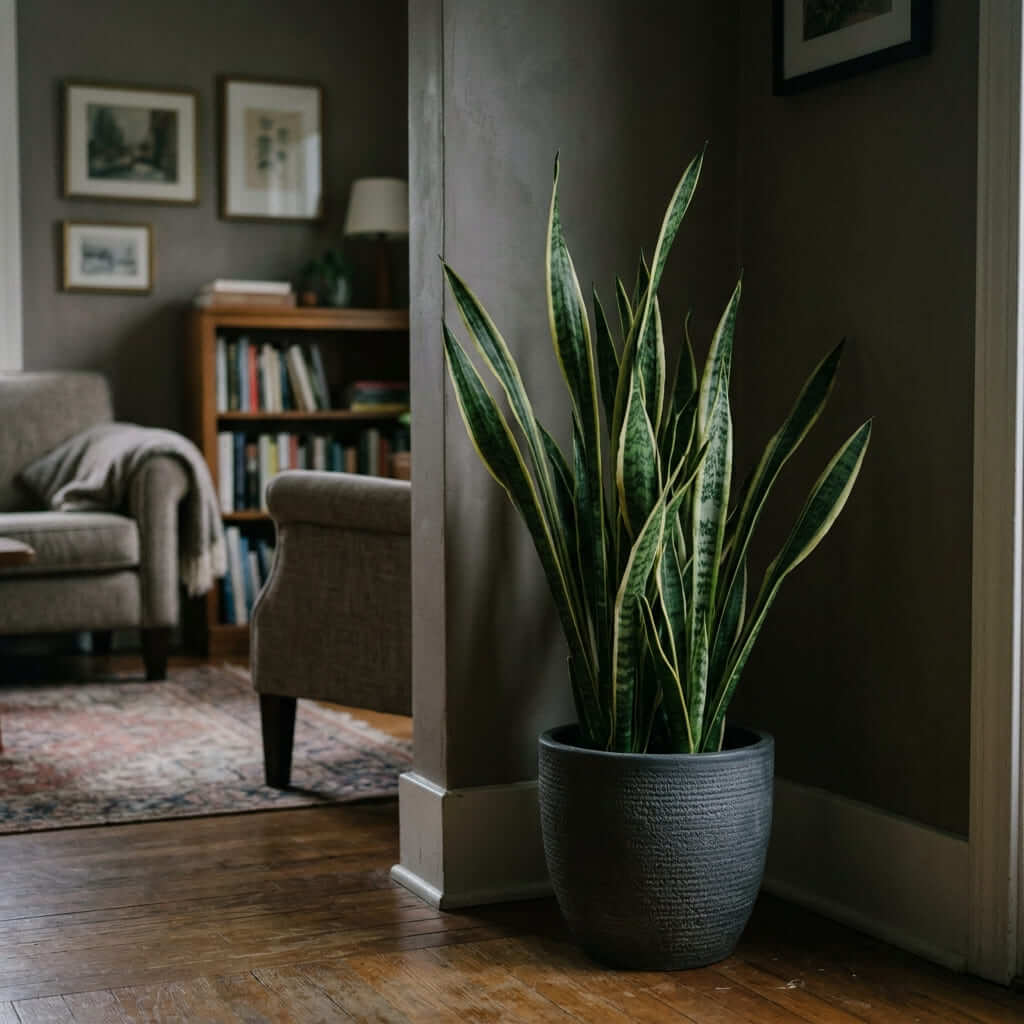
The snake plant is one of the most popular low light indoor plants because it tolerates dim corners, irregular watering, and a bit of neglect. Its tall, upright leaves also add a modern, sculptural shape to a room. Let the soil dry out between waterings, since too much water is the main thing that harms it.
Pet note: the ASPCA lists snake plant as toxic to cats and dogs.
2. ZZ Plant
The ZZ plant has glossy, dark green leaves and stores water in its thick underground stems, so it handles dim light and missed waterings well. It’s a good choice if you travel often. Water only when the soil has fully dried out, and expect slow growth in low light.
Pet note: the ASPCA lists ZZ plant as toxic to cats and dogs.

3. Pothos
Pothos is an easy trailing plant that works on a shelf, a high cabinet, or a hanging planter. It tolerates lower light, though the pretty variegated leaves can fade to plain green in dim spots. Check the soil with your finger and water when the top layer feels dry.
Pet note: the ASPCA lists pothos as toxic to cats and dogs.

4. Cast Iron Plant
The cast iron plant earned its name for being very hard to kill. It copes with dim light, dry air, and irregular care, and its dark, broad leaves look good in a floor planter. It grows slowly, so buy a size you’ll be happy with from the start.
Pet note: the ASPCA lists cast iron plant as non-toxic to cats and dogs.
5. Chinese Evergreen
Chinese evergreens come in many leaf patterns. Varieties with darker green leaves generally cope better with low light than the more colorful, patterned ones, so choose accordingly for a dim room. Keep the soil lightly moist, but don’t let the pot sit in water.
Pet note: the ASPCA lists Chinese evergreen as toxic to cats and dogs.

6. Peace Lily
Peace lilies tolerate lower light and signal clearly when they’re thirsty by drooping, which makes them forgiving for beginners. They may flower less in a dim spot, but the dark green foliage still looks lush. Water when the leaves start to look slightly droopy or the soil is dry, and the plant usually perks back up.
Pet note: the ASPCA lists peace lily as toxic to cats and dogs.

7. Heartleaf Philodendron
Heartleaf philodendron is a trailing plant with soft, heart-shaped leaves, and it adapts well to dim rooms. It’s an easy way to add greenery to a bookshelf or the top of a wardrobe. Let the top of the soil dry slightly between waterings, and trim long vines to keep it full.
Pet note: the ASPCA lists philodendron as toxic to cats and dogs.

8. Parlor Palm
The parlor palm has soft, feathery fronds and tolerates lower light, which gives a dim room a gentle, tropical feel without being huge. It grows slowly and stays a manageable size. Avoid letting it sit in standing water, and keep the soil from drying out completely.
Pet note: the ASPCA lists parlor palm as non-toxic to cats and dogs.

9. Spider Plant
Spider plants are adaptable and cheerful, with arching striped leaves. They grow best in brighter light but adjust to a dimmer spot, which makes them a flexible choice for hanging planters and shelves. Water when the top of the soil is dry, and use a pot with drainage holes.
Pet note: the ASPCA lists spider plant as non-toxic to cats and dogs.

10. Lucky Bamboo
Lucky bamboo is a small plant that can grow in water, which makes it practical for a desk, a windowsill, or a bathroom shelf. It prefers indirect light and tolerates dimmer rooms. If you grow it in water, use clean water and change it regularly.
Pet note: the ASPCA lists lucky bamboo as toxic to cats and dogs.

Are Low Light Indoor Plants Safe for Pets?
It depends on the plant. Of the 10 above, the cast iron plant, parlor palm, and spider plant are listed as non-toxic to cats and dogs by the ASPCA, while the others are listed as toxic. If you have a cat or dog that chews plants, choose from the non-toxic group or keep toxic plants out of reach. Plant safety information can change, so check the ASPCA toxic and non-toxic plants list before you buy.
Where to Put Low Light Indoor Plants
In the bedroom: snake plants, ZZ plants, and peace lilies suit a dim bedroom, and a trailing plant on a high shelf saves floor space. For more bedroom styling, see our Small Bedroom Decor Ideas guide.
In the living room: a floor plant beside the sofa softens a corner, and plants add a natural contrast to warm tones. Our Cozy Living Room Design Ideas and Brown Couch Living Room Ideas guides show how greenery fits into a styled room.
On shelves: trailing plants like pothos and philodendron look good on open shelving. See our Built-In Shelves Living Room Ideas guide for styling shelves without clutter.
How to Care for Low Light Indoor Plants
- Water less often. Plants in dim rooms use water slowly. Check that the soil is dry before watering.
- Use pots with drainage holes. Water sitting at the bottom of a pot is a common cause of problems.
- Dust the leaves. Dusty leaves absorb less of the light that’s available, so wipe them gently from time to time.
- Rotate the pot occasionally. This helps the plant grow evenly toward the light.
- Skip heavy fertilizing. Slow-growing plants need very little. For general houseplant care advice, the Royal Horticultural Society is a helpful reference.
Do You Need a Grow Light?
If a room gets almost no natural light, or has no window, a grow light can help. A small LED grow bulb in a regular lamp works for many apartments. Plants in a bright-enough spot don’t need one, so only add one if your plant is clearly struggling.
Low Light Indoor Plant Mistakes to Avoid
Assuming low light means no light Even these plants need some daylight. A completely dark corner will eventually cause problems.
Overwatering Plants in dim rooms dry out slowly. Watering on a fixed schedule instead of checking the soil is a common mistake.
Choosing plants by looks alone A colorful or patterned plant may need more light than a plain green one. Match the plant to your actual light.
Ignoring pet safety Several popular low light plants are toxic to cats and dogs. Check the ASPCA list first.
Skipping drainage A pot without drainage holes can leave roots sitting in water.
Final Thoughts
A dim apartment doesn’t have to stay plant-free. Low light indoor plants like the snake plant, ZZ plant, pothos, and cast iron plant tolerate dimmer rooms and add real life to a space, as long as you give them some natural light and don’t overwater. Start with one or two plants that suit your light and your pets, place them where they’ll get whatever daylight you have, and add more as you learn what works in your home.