Skip to content


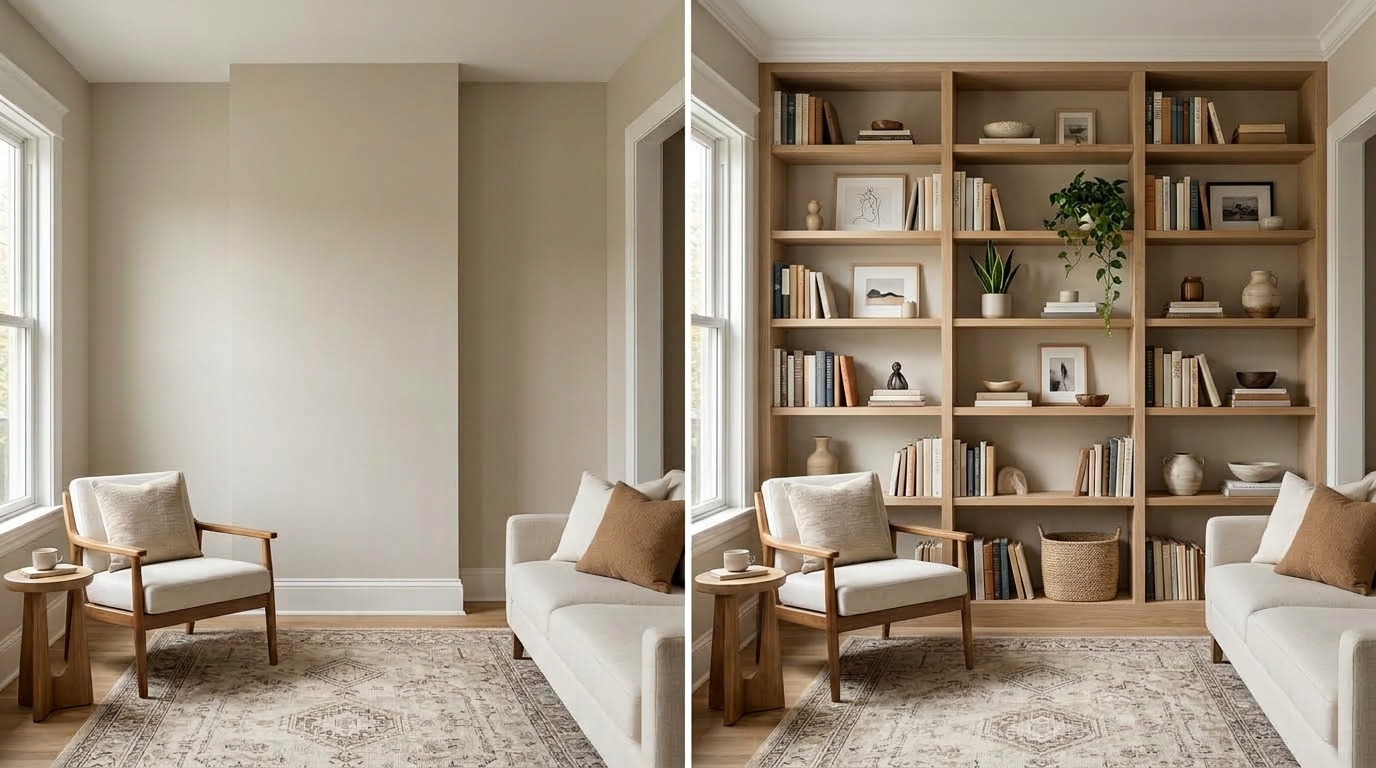
A living room can quickly feel unfinished when there is an empty wall with nowhere to display books, artwork, plants, or meaningful decor. Built-in shelves in a living room can solve both problems at once by adding storage while giving the room a stronger visual structure.
From floor-to-ceiling shelving to simple open shelves around a TV or fireplace, the right design can make unused wall space more useful without making the room feel crowded. The key is not simply adding as many shelves as possible. Instead, think about what you actually need to store, how much of the wall you want to cover, and how the shelves will work with your existing furniture and lighting. In this guide, you’ll find practical built-in shelves living room ideas, styling tips, and ways to make open shelving feel intentional rather than cluttered.
1. Use Floor-to-Ceiling Built-In Shelves
Floor-to-ceiling shelving is a useful way to make an entire wall feel purposeful. Instead of leaving a large vertical area empty, you can create storage and display space from the floor upward. Use the lower sections for larger items such as baskets, books, or storage boxes, while keeping artwork, plants, and smaller decorative objects on the upper shelves. If the room already contains a lot of furniture, keep the shelving relatively simple. A consistent material and restrained color palette can prevent the wall from becoming visually overwhelming.
2. Frame the TV With Built-In Shelving
If your television is already the main focal point of the room, built-in shelving can help integrate it into the overall design. Instead of having a TV sitting alone on a large blank wall, shelves can surround the screen and create a balanced composition. Keep the area immediately around the television relatively simple. Books, small plants, framed artwork, and a few decorative objects can fill the surrounding shelves without competing with the screen.
This approach connects naturally with our Living Room TV Wall Decor Ideas guide, which covers additional ways to make a television wall feel more intentional.

3. Combine Open Shelves With Closed Storage
Not everything in a living room needs to be displayed. A combination of open shelves and closed cabinets gives you space for both attractive displays and everyday items you would rather keep hidden. Use open shelves for books, artwork, plants, and objects you enjoy looking at. Reserve closed cabinets or drawers for electronics, cables, games, paperwork, and other items that can make a room look messy. This combination is especially useful if your living room needs to function as both a relaxing space and a practical storage area.
4. Create a Built-In Reading Corner
Built-in shelving can also become part of a dedicated reading area. Place books within easy reach and leave enough open space around a comfortable chair. A small side table and a floor or table lamp can make the area more practical without requiring a large amount of furniture. If possible, position the reading corner near a window so it benefits from natural daylight during the day. The goal is to create a useful zone rather than filling every available wall with shelves.

5. Style Shelves With Books and Artwork
Books are one of the easiest ways to make shelving feel useful and personal. Instead of lining every shelf with books from one end to the other, mix horizontal and vertical arrangements. Add a small framed artwork, vase, or plant between groups of books to create visual variation.
Try to repeat a few colors throughout the shelving so the display feels connected rather than random. For more ways to bring artwork into your living room, our Living Room Wall Decor Ideas guide covers additional styling approaches beyond shelving. You do not need to fill every shelf. Empty space gives the eye somewhere to rest and can make the entire arrangement feel more intentional.
6. Add Warm Lighting to Built-In Shelves
Lighting can change how built-in shelving looks, particularly in the evening. Small integrated lights or warm LED strips can highlight books, artwork, and decorative objects without requiring additional floor space. Choose warm rather than harsh lighting if you want the shelves to contribute to a comfortable atmosphere. Keep the lighting subtle. The goal is to highlight the shelving and its contents rather than make the shelves look like a brightly lit display cabinet.
7. Use Natural Wood for a Warmer Look
Natural wood can make shelving feel warmer and less formal. Oak, walnut, and other wood finishes can work particularly well with neutral sofas, textured rugs, woven baskets, and greenery. If the rest of your living room already contains several wood elements, repeat a similar tone on the shelving so the room feels connected. You do not have to match every wood surface perfectly — slight variations can add character as long as the overall tones work together. This is also a useful way to add warmth without relying on lots of small decorative objects.

8. Keep Open Shelving From Looking Cluttered
Open shelving looks best when there is a balance between displayed objects and empty space. Avoid putting something on every shelf simply because the space is available. Instead, group related objects together and vary their height.
For example, one shelf might contain several books with a small plant, while another could feature a framed artwork with a single decorative object. If the shelves begin to feel visually busy, remove a few items rather than adding more.
9. Use Built-In Shelves to Create a Focal Wall
A full wall of shelving can become one of the strongest architectural features in a living room. If you want the shelves to become a focal point, keep the surrounding furniture relatively simple — a sofa, rug, coffee table, and a few carefully chosen accessories can provide enough contrast without competing with the wall. You can also use the shelving to visually frame an existing fireplace or architectural feature, treating the entire wall as one composition rather than decorating each shelf independently.

10. Choose Shelving That Fits Your Living Room
The most successful shelving design is one that works with the room you already have. Before installing shelves, consider the location of windows, doors, radiators, electrical outlets, furniture, and walking paths — the same layout thinking covered in our Living Room Furniture Arrangement Ideas guide applies just as much to planning shelving as it does to seating.
Think about the height and depth as well. Deep shelves may provide more storage, but they can also make a narrow room feel tighter. If you are working with an existing living room, measure the available wall carefully and decide what the shelves need to hold before choosing their dimensions. A beautiful shelving system should still leave the room comfortable and easy to use.

How to Style Built-In Shelves Without Overcrowding Them
Once the shelving is installed, styling becomes just as important as the design itself. A simple formula is to combine:
- Books for height and function
- Artwork for visual interest
- Plants for natural texture
- Baskets for hidden organization
- Small decorative objects for personality
- Empty space for balance
Instead of making every shelf look identical, create small variations from one section to another. For example, one shelf might be mostly books, while the next has a plant and artwork. This creates rhythm without making the shelving look overly planned.
Built-In Shelves vs. Open Shelves
Both options can work well, but they serve slightly different purposes. Built-in shelves are ideal when you want a permanent, tailored storage solution that works with the architecture of the room. Open shelves can be more flexible and visually lightweight, especially when you want to display books, artwork, and decorative pieces without adding large cabinets.
Think about how you use your living room before choosing between them. If storage is the priority, closed cabinets combined with open shelving may be more practical. If display is the priority, simple open shelves may be enough.
Common Built-In Shelving Mistakes
Filling every shelf completely
A shelf packed from end to end looks cluttered no matter how nice the individual objects are. Leave visible empty space so the eye has somewhere to rest.
Choosing shelves too deep for the room
Deep shelving offers more storage but can make a narrow living room feel tighter. Measure the room, not just the wall, before deciding on depth.
Ignoring windows, outlets, and walking paths during planning
Shelving that blocks a window, outlet, or walkway causes daily frustration no matter how good it looks. Plan around the room’s existing layout first.
Styling every shelf identically
Repeating the same arrangement on every shelf can look mechanical rather than curated. Vary height, grouping, and object type from one section to the next.
Treating built-ins as the only decor the wall needs
A full shelving wall can still feel unfinished without warm lighting or a few personal, meaningful objects mixed in among the practical items.
Final Thoughts
The best built-in shelves living room design is not necessarily the largest or most elaborate one. It is the one that gives your room useful storage, creates visual structure, and works naturally with the furniture and architecture already there. Whether you choose floor-to-ceiling bookcases, shelves around the TV, natural wood shelving, or a combination of open and closed storage, focus on balance.
Give your favorite objects room to stand out, leave some shelves partially empty, and use lighting and texture to make the display feel connected to the rest of the living room. That way, your shelving becomes more than storage — it becomes part of the room’s overall design.