Skip to content


Many popular houseplants can make cats sick if they chew them, and cats love to chew leaves. If you share your apartment with a cat, it helps to choose plants that are listed as non-toxic, so you can enjoy greenery without worrying. This guide covers 10 cat friendly indoor plants that the ASPCA lists as non-toxic to cats, along with a short list of plants to avoid and a few tips for keeping your plants and your cat both happy.
An Important Note First
“Non-toxic” does not mean a cat should eat plants. Eating a lot of any plant can cause an upset stomach, so it’s still worth discouraging chewing. If your cat eats a plant and seems unwell, contact your vet or an animal poison control service. Plant safety information can change, so check the ASPCA toxic and non-toxic plants list before you buy any plant.
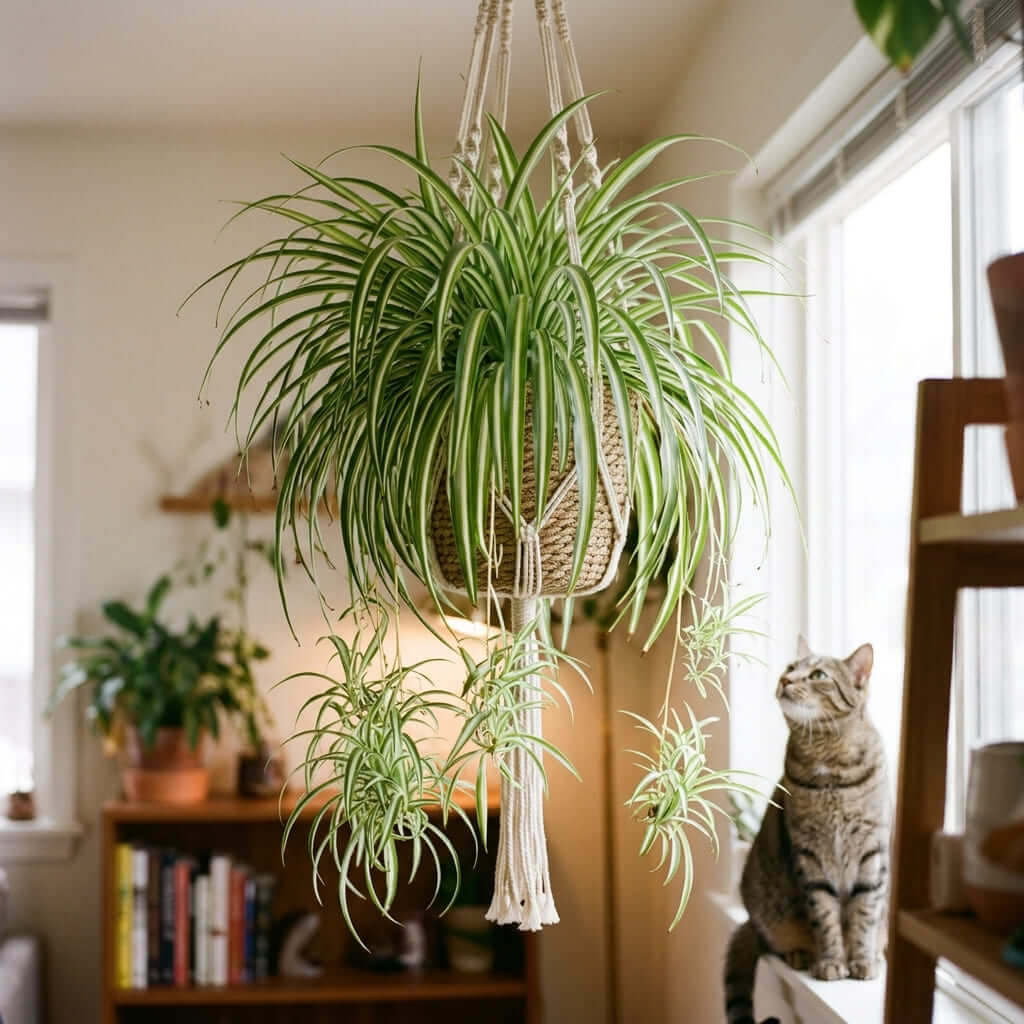
1. Spider Plant
The spider plant has arching, striped leaves and grows well in a hanging basket or on a shelf. It grows best in bright, indirect light but adjusts to dimmer spots. Water when the top of the soil is dry.
2. Parlor Palm
The parlor palm has soft, feathery fronds and tolerates lower light, which makes it easy to place in an apartment. It grows slowly and stays a manageable size. Avoid letting it sit in standing water.
ASPCA: non-toxic to cats and dogs.

3. Areca Palm
The areca palm has arching, feathery fronds and adds height and a tropical feel. It prefers bright, indirect light. Keep the soil lightly moist but not soggy.
ASPCA: non-toxic to cats and dogs.

4. Boston Fern
Boston ferns have full, arching fronds and like humidity, so a bathroom or kitchen window suits them. They need more regular watering than many plants. Don’t let the soil dry out completely.
ASPCA: non-toxic to cats and dogs.

5. Calathea
Calatheas have patterned leaves that fold up at night, which makes them a decorative choice. They prefer bright to medium indirect light and humidity, and they can be fussy about dry air. Keep the soil lightly moist.
ASPCA: non-toxic to cats and dogs.

6. Peperomia
Peperomias are small plants with thick, textured leaves in many shapes and colors. They prefer bright, indirect light, and their leaves hold some water, so let the soil dry slightly between waterings. They stay compact, which suits a small space.
ASPCA: non-toxic to cats and dogs.
7. Chinese Money Plant
The Chinese money plant has round, coin-like leaves and a tidy shape. It prefers bright, indirect light, and turning the pot helps it grow evenly. It sometimes produces baby plants you can pot up.
ASPCA: non-toxic to cats and dogs.

8. Cast Iron Plant
The cast iron plant is known for being very hard to kill. It tolerates dim light and irregular care, and its dark, broad leaves look good in a floor planter. It grows slowly, so choose a size you’re happy with.
ASPCA: non-toxic to cats and dogs.
9. Haworthia
Haworthia is a small succulent with striped, spiky leaves. It stays compact and prefers bright, indirect light. Water sparingly. It’s a good choice for a windowsill or desk.
ASPCA: non-toxic to cats and dogs.

10. African Violet
African violets have soft, fuzzy leaves and flower regularly indoors. They prefer bright, indirect light. Try to water the soil rather than the leaves.
ASPCA: non-toxic to cats and dogs.

Plants to Avoid With Cats
Some plants are especially dangerous for cats. True lilies (Lilium) and daylilies are widely known to be highly dangerous to cats, even in small amounts. Sago palm is also very toxic to pets. Other common houseplants, such as pothos, philodendron, snake plant, and aloe vera, are listed by the ASPCA as toxic to cats.
Our Low Light Indoor Plants guide marks which popular low light plants are safe and which aren’t, so you can compare before you buy.
How to Keep Cats and Plants Both Happy
- Offer cat grass. A pot of cat grass gives cats something safe to chew instead of your other plants.
- Place plants out of reach. A high shelf or a hanging pot can discourage chewing, but cats can climb, so don’t rely on height alone.
- Use heavier pots. Light pots are easy for a cat to knock over.
- Cover the soil. A layer of pebbles can discourage digging.
- Watch your cat. Even with non-toxic plants, if your cat keeps chewing, move the plant.
For general houseplant care, the Royal Horticultural Society is a helpful reference.
Where to Put Cat Friendly Indoor Plants
On a shelf: peperomia and haworthia stay small and look good on shelves. See our Built-In Shelves Living Room Ideas guide.
In a hanging planter: spider plant and Boston fern work well hung above a window. See our Indoor Hanging Plants guide.
In the living room: a parlor palm or areca palm beside the sofa softens a corner. See our Cozy Living Room Design Ideas guide.
Cat Friendly Plant Mistakes to Avoid
Assuming all houseplants are safe Many popular plants are toxic to cats. Always check the ASPCA list first.
Treating “non-toxic” as “safe to eat” Eating a lot of any plant can cause an upset stomach.
Forgetting about lilies in bouquets Lilies are very dangerous to cats, so keep them out of the home.
Relying on height alone Cats climb and jump, so a high shelf isn’t always out of reach.
Skipping a safe alternative A pot of cat grass can redirect chewing away from your other plants.