Skip to content


Curtains can completely change how a living room looks and feels. The right curtains can soften hard lines, add warmth, make windows feel larger, and bring the rest of the room together. But choosing curtains is not only about picking a beautiful fabric or color. The length, width, placement, material, and color all affect how the finished room looks. In this guide, you’ll find practical living room curtain ideas that work with different decorating styles, window sizes, and color palettes—without making the room feel overly decorated.
1. Hang Curtains Higher to Make the Room Feel Taller
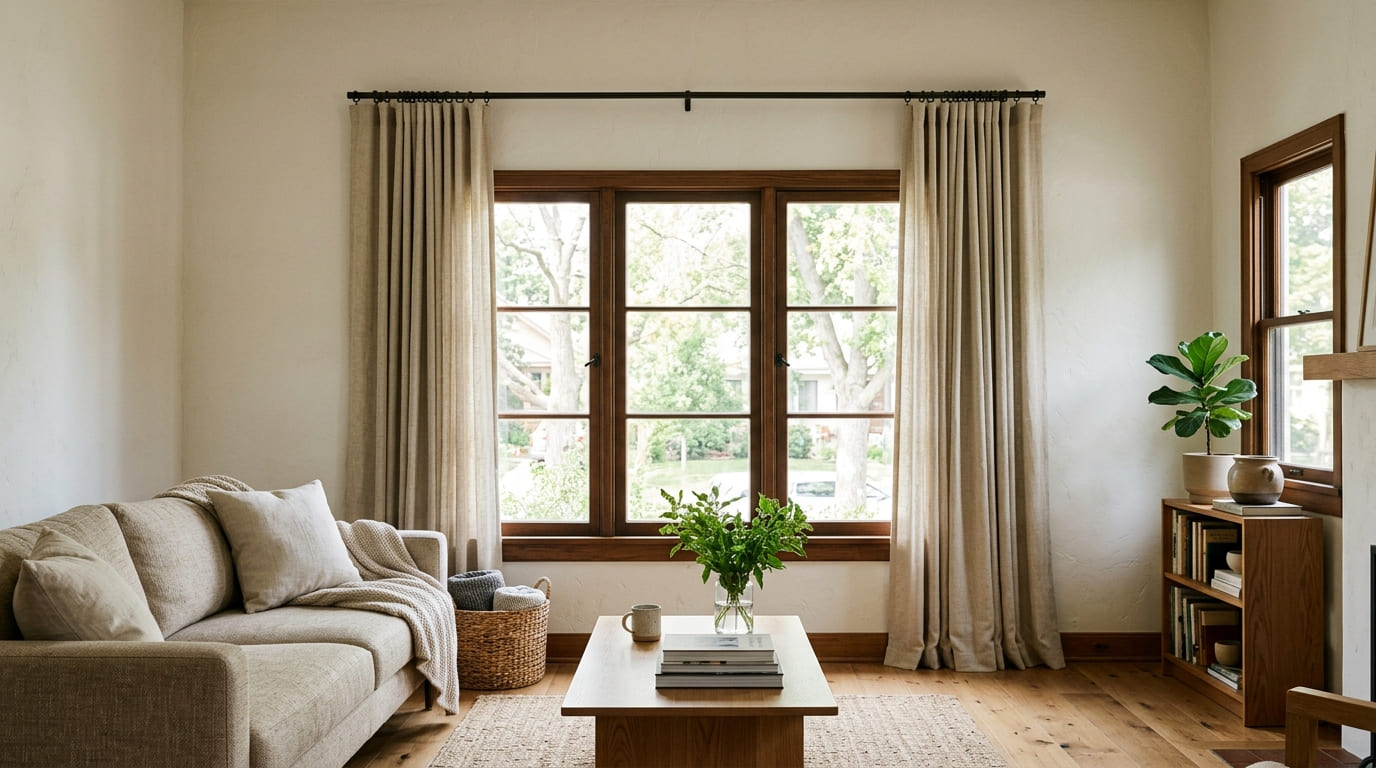
One of the simplest ways to improve the look of your living room is to reconsider where the curtain rod is placed. Instead of mounting the rod immediately above the window frame, consider positioning it higher on the wall. This draws the eye upward and can make the windows and ceiling feel taller. Extend the curtain rod beyond the sides of the window as well. When the curtains are pulled open, more of the glass remains visible and the window does not feel unnecessarily compressed.
2. Choose Floor-Length Curtains for a Polished Look
Floor-length curtains usually create a more finished appearance than curtains that stop several inches above the floor. For a clean and practical look, the fabric can gently meet the floor. Avoid leaving a large gap between the bottom of the curtain and the floor unless a shorter style is intentional. The length should also work with the furniture and walking space around the window. In a busy living room, curtains should look elegant without becoming a tripping hazard.

3. Use Linen Curtains for a Light, Relaxed Look
Linen curtains are a useful choice when you want your living room to feel bright, relaxed, and natural. Their slightly textured appearance works particularly well with wood furniture, neutral upholstery, woven rugs, and other natural materials. Choose lighter linen shades such as warm white, cream, beige, or soft greige when you want to maintain an airy feeling. For a room that needs more privacy, look for lined or layered options rather than relying on very thin fabric alone.

4. Add Warmth With Beige or Cream Curtains
If your living room already has neutral furniture, beige or cream curtains can add warmth without creating a strong visual contrast. This works especially well when the sofa, walls, rug, and curtains belong to a similar warm color family. Instead of making everything exactly the same shade, use slightly different tones and textures. For example, a cream curtain can work with a beige sofa and a light brown wood table. This creates depth while keeping the overall room calm. If you’re working with a smaller space, you can also explore our Small Living Room Decor Ideas to Make Your Space Feel Bigger & Cozier for more ways to create a warm and inviting room.
5. Try Dark Curtains for a Stronger Contrast
Curtains do not always have to be light. Charcoal, deep brown, navy, or muted olive curtains can create contrast and give a living room more visual depth. The key is to balance darker curtains with lighter or warmer elements elsewhere in the room. A dark curtain can work particularly well when its color is repeated in smaller details such as cushions, artwork, lamps, or a rug. Avoid using dark curtains simply because they look dramatic in a photograph. Consider how much natural light your room receives before choosing a heavy, dark fabric. If you like this deeper, layered look, explore our Moody Living Room Ideas for more ways to create a cozy and dramatic space.
6. Use Sheer Curtains to Soften Natural Light
Sheer curtains are useful when you want daylight while still creating a softer, more private atmosphere. They allow light to pass through the room instead of blocking it completely. This makes them particularly useful for living rooms with large windows or rooms that already have limited natural light. For more flexibility, pair sheer curtains with heavier side panels. During the day, the sheer layer can filter sunlight, while the heavier curtains can be closed when more privacy is needed.

7. Layer Sheer Curtains With Heavier Panels
Layering two curtain types can make a window feel more complete while giving you better control over light and privacy. A simple combination is a sheer inner layer with heavier curtains on the outside. During the day, leave the heavier panels open and allow the sheer curtains to filter the sunlight. In the evening, close the outer curtains for more privacy. Choose fabrics and colors that work together instead of making each layer compete for attention.
8. Match Curtains With the Room’s Color Palette
Your curtains do not need to exactly match your sofa, but they should feel connected to the room’s overall color palette. Look at the colors already present in your rug, cushions, artwork, walls, and furniture. Then choose a curtain shade that complements one or two of those colors. For example, a room with warm beige furniture and brown wood can work beautifully with cream, taupe, or muted brown curtains. If the room already has many patterns and colors, a solid curtain may create a more balanced result.
9. Use Curtains to Frame Large Windows
Large windows can become one of the main visual features of a living room. Instead of covering the entire window with heavy fabric, use curtains to frame the glass while keeping as much natural light visible as possible. Wider curtain panels placed outside the window can create a fuller appearance when they are open. This approach also works well when the living room has a beautiful outdoor view that you do not want to completely hide.

10. Choose Curtains That Work With Your Furniture Arrangement
Curtains should work with the furniture rather than becoming an obstacle around it. Before choosing the final length and placement, consider where your sofa, chairs, side tables, and walking paths are located. A curtain that hangs behind a sofa may need a slightly different arrangement from one beside an open wall. Think about the entire room rather than treating the window as a separate decorating project. For more practical ideas on positioning sofas, chairs, tables, and walking paths, see our Living Room Furniture Arrangement Ideas guide.
11. Pick Curtain Fabric Based on the Room’s Needs
The appearance of a curtain matters, but so does how the fabric functions. Lightweight fabrics can help a room feel airy and bright. Heavier fabrics can provide more privacy and create a richer, more dramatic appearance. Think about the amount of sunlight, privacy, temperature, and overall atmosphere you want before choosing the material. For example, a bright living room with strong afternoon sunlight may benefit from a lined curtain, while a darker room may work better with a lighter fabric that allows more daylight through.
12. Keep Patterned Curtains Balanced
Patterned curtains can add personality, but they need to work with everything else in the room. If your sofa, rug, cushions, and artwork already have strong patterns, a simple curtain may be easier to style. On the other hand, if the room is mostly neutral, a subtle striped, botanical, or geometric curtain can become an interesting focal point. The goal is not to make every element compete for attention. Let one or two features stand out while the rest support them.

Common Curtain Mistakes to Avoid
Beautiful curtains can still look wrong if the proportions or placement are off. Before installing yours, check these common mistakes:
- Choosing curtains that are noticeably too short
- Hanging the rod directly on top of the window frame
- Using panels that are too narrow for the window
- Blocking too much natural light
- Choosing a fabric that does not suit the room’s needs
- Adding too many patterns to an already busy room
- Ignoring the furniture and walking paths around the window
- Choosing a curtain color that fights with the existing palette
Taking measurements before buying curtains can prevent many of these problems. Curtain length and rod placement have a particularly strong effect on the finished appearance of the room.
How to Choose the Right Living Room Curtains
Before buying your curtains, look at the room as a whole. First, consider the window size and position. Then think about how much light and privacy you need. Next, choose the curtain length and rod placement. After that, select a fabric and color that work with your existing furniture, flooring, walls, and accessories. Finally, consider whether you want the curtains to quietly blend into the room or become a noticeable design feature.
A successful curtain choice should make the room feel more complete without making the window treatment look disconnected from everything else.