Skip to content


A kitchen can have beautiful cabinets and still feel chaotic every time you open one. Cluttered shelves, mismatched containers, and items stacked three deep make even simple tasks — finding a specific pan, grabbing a spice — more frustrating than they should be. The good news is that organizing kitchen cabinets doesn’t require a renovation or expensive built-ins. A few practical tools and a bit of planning can turn a crowded cabinet into a space that actually works for how you cook.
These 10 kitchen cabinet organization ideas focus on realistic, renter-friendly solutions that make a real difference, whether you’re working with a small apartment kitchen or simply want less daily frustration opening your cabinets.
1. Use Clear Containers for Pantry Items
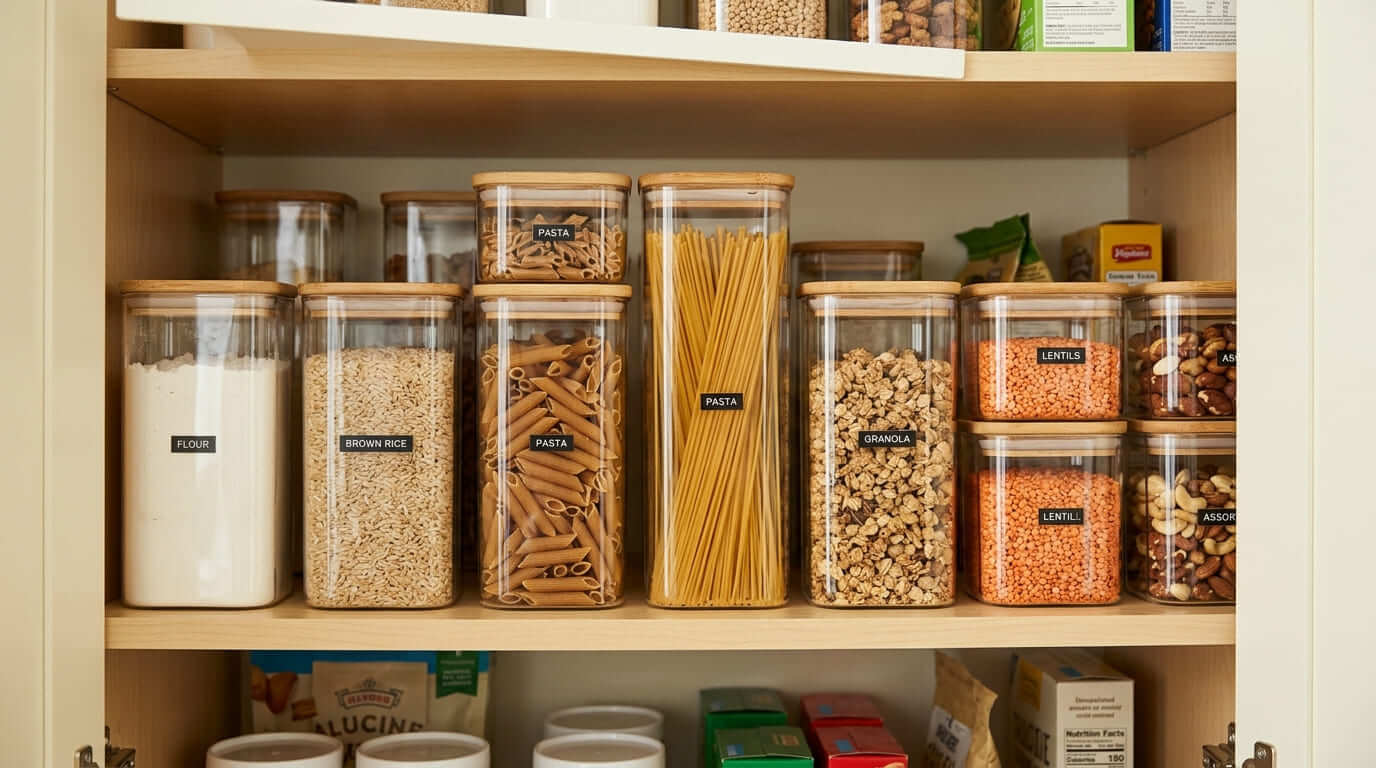
Clear, uniform containers are one of the most effective kitchen cabinet organization ideas because they let you see exactly what you have and how much is left, without opening every bag or box. Transfer dry goods such as flour, rice, pasta, cereal, and snacks into matching clear containers. This also keeps food fresher longer and prevents the visual clutter of mismatched packaging taking up shelf space. The same principle — keeping everyday items visible and contained rather than hidden in random spots — works well throughout a small space, as covered in our Small Living Room Decor Ideas guide. Choose containers that stack or nest when empty, so they don’t take up extra storage themselves when you’re not using all of them.
2. Add Pull-Out Shelves or Drawers
Deep cabinets, especially lower ones, often become a place where items get pushed to the back and forgotten. Pull-out shelves or drawer inserts solve this by bringing the entire shelf forward, so nothing is hidden in the back corner. Many pull-out shelf inserts are designed to fit into existing cabinets without permanent installation, making them a practical option for renters as well as homeowners. This is especially useful for pots, small appliances, and anything else that tends to get buried in a deep cabinet.

3. Use Stackable Shelf Risers
A single shelf in a tall cabinet often wastes the vertical space above shorter items like mugs, cans, or small jars. Stackable shelf risers create a second, elevated level within the same shelf, roughly doubling the usable space without any installation. This works particularly well for canned goods, spice jars, and stacked plates or bowls, where items are generally the same height and can be organized by row. Choose risers with a stable, non-slip base, especially if your kitchen sees frequent daily use.
4. Install a Lazy Susan for Corner Cabinets
Corner cabinets are some of the most awkward spaces in any kitchen, with items frequently getting lost in the back corner where you can barely reach. A lazy Susan — a rotating tray — solves this by letting you spin the entire shelf into view instead of reaching blindly. This works well for oils, vinegars, spices, and other smaller bottles and jars that would otherwise disappear into the corner. Two-tiered lazy Susans can further increase the usable space in a single corner cabinet.

5. Use Door-Mounted Organizers
The inside of a cabinet door is often completely unused space. Door-mounted racks or organizers add storage for small, frequently used items without taking up any shelf space at all. This is particularly useful for things like spice jars, cutting boards, cleaning supplies under the sink, or lids that would otherwise create a messy stack elsewhere in the cabinet. Choose an adjustable organizer so you can customize the spacing based on what you’re storing, and measure the door depth first to make sure it won’t interfere with the shelf behind it.

6. Group Items by Category and Zone
One of the simplest kitchen cabinet organization ideas doesn’t require buying anything at all — it’s deciding what goes where based on how you actually use your kitchen. Keep baking supplies together near where you bake, everyday dishes near the dishwasher or sink for easy put-away, and snacks at a height kids or other household members can reach on their own. This “zone” approach is the same layout thinking behind our Living Room Furniture Arrangement Ideas guide, where defining purpose-based areas makes a space easier to use. This reduces the number of steps involved in common kitchen tasks and makes it easier to notice when something is running low, since similar items live in one consistent place.
7. Add Drawer Dividers for Utensils
A kitchen drawer without dividers almost always ends up as a jumbled pile, regardless of how carefully it started out. Drawer dividers or trays keep utensils separated and visible, which makes both finding and putting away items faster. Adjustable, expandable dividers work particularly well because they can be resized to fit drawers of different widths, which is useful if you move between rentals with different kitchen layouts. Group utensils by type — cooking tools in one section, cutlery in another — rather than mixing everything into a single compartment.
8. Use Vertical Dividers for Trays and Cutting Boards
Flat items like baking sheets, cutting boards, and serving trays are notoriously difficult to store because they tend to get stacked on top of each other, making it hard to pull out the one you actually need. Vertical dividers, either freestanding or cabinet-mounted, let you slot these items in upright, side by side. This means you can access any single tray or board without unstacking the entire pile first. This idea works especially well in a cabinet near the oven, where baking sheets are used most often.

9. Label Everything for Easy Access
Labels might seem like a small detail, but they make a noticeable difference in keeping an organized cabinet actually stay organized over time. When every container and bin has a clear label, it’s much easier for everyone in the household to put things back in the right place. This is particularly useful for clear containers holding similar-looking dry goods, as well as bins used for less obvious categories like “baking,” “snacks,” or “lunch supplies.” A simple label maker or even handwritten tags on removable tape are enough — the goal is consistency, not elaborate design.

10. Declutter Before You Organize
Before buying a single organizing product, it’s worth going through your cabinets and removing anything you no longer use, have duplicates of, or have been meaning to get rid of for months. Organizing a cabinet full of things you don’t actually need just creates a tidier version of the same clutter problem. Check expiration dates on pantry items, consolidate duplicate kitchen tools, and donate anything you haven’t used in the past year. This step alone often solves more of the “my cabinets feel too full” problem than any organizing product can. For more on applying this same decluttering mindset to shelving throughout your home, see our Built-In Shelves Living Room Ideas guide.

How to Organize Kitchen Cabinets on a Budget
These kitchen cabinet organization ideas don’t need an expensive system to make a real difference in how your cabinets function. Start with what makes the biggest impact for the lowest cost: decluttering first, then adding a few stackable risers and a set of drawer dividers. Repurpose jars you already own as clear containers before buying a matching set, and use painter’s tape and a marker for labels instead of a dedicated label maker. Add pull-out shelves, a lazy Susan, or door-mounted organizers gradually, prioritizing whichever cabinet currently causes the most daily frustration.
Kitchen Cabinet Organization Mistakes to Avoid
Buying organizers before measuring A pull-out shelf, lazy Susan, or drawer divider that doesn’t fit your actual cabinet dimensions is wasted money. Always measure first.
Organizing clutter instead of removing it Sorting items you don’t actually need into neat bins still leaves you with too much stuff. Declutter before adding any organizing system.
Ignoring vertical space A single shelf with empty space above shorter items wastes a significant portion of the cabinet’s actual capacity. Shelf risers solve this cheaply.
Mixing categories in one space Storing baking supplies, snacks, and cleaning products together in one cabinet makes everything harder to find. Group by category and zone instead.
Skipping labels An organized cabinet can slide back into chaos within weeks if containers aren’t labeled, especially in a shared household.