Skip to content


The TV wall is often one of the largest visual areas in a living room, so leaving it completely bare can make the space feel unfinished. At the same time, adding too many decorations around the television can make the wall look busy and pull attention away from the room itself.
The best living room TV wall decor ideas create balance around the screen — using wood panels, shelving, artwork, lighting, or even a fireplace — so the TV feels like an intentional part of the room rather than the only thing anyone notices when they walk in. None of these require rearranging your furniture layout — just building the wall around the TV more deliberately.
1. Frame the TV With Symmetrical Floating Shelves
Open or floating shelves on either side of the TV can turn the wall into a designed feature instead of simply a place where the television happens to be mounted. You can go two directions here. A symmetrical arrangement — matching shelves at the same height, styled with a similar amount of decor on each side — reads as more formal and put-together almost instantly. An asymmetrical arrangement, with shelves at varied heights and a looser mix of objects, feels more relaxed and collected over time. Either works, as long as the shelves share the same material, finish, and one or two repeated colors so the arrangement reads as one connected composition. Leave real breathing room between objects. Shelves filled edge to edge quickly make the wall look cluttered rather than styled.
2. Add a Wood Panel or Accent Wall Behind the TV
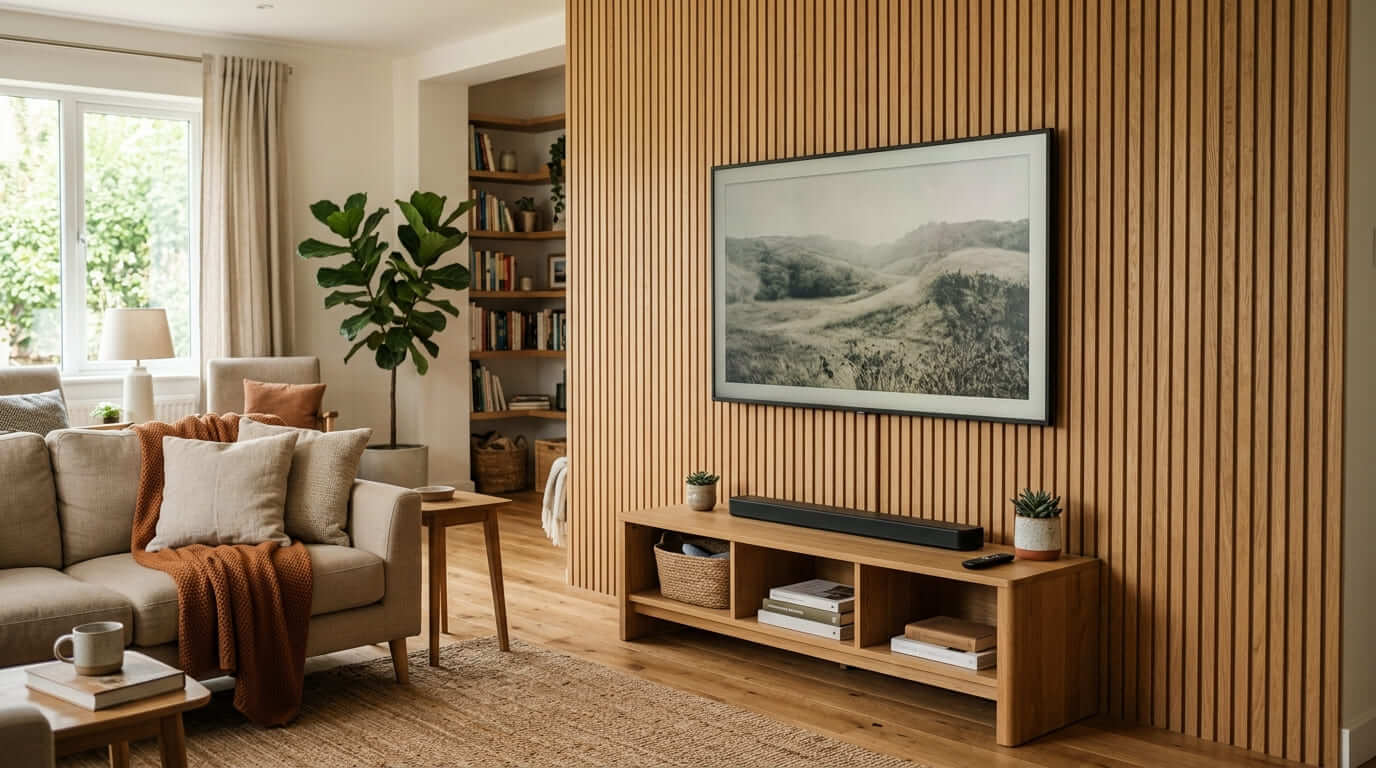
A plain, flat wall can leave a black TV screen looking like it’s floating with nothing to visually anchor it. Vertical wood slats, warm oak panels, or a slightly deeper paint color behind the television give the screen somewhere to sit, softening its appearance without adding extra decoration. Wood paneling is especially popular because the natural grain reads as texture in the background rather than competing decoration once the screen is on. Pair it with a low media console underneath to complete the wall without making it feel crowded. If you’re renting, peel-and-stick wood panels or a large fabric panel behind the console can achieve a similar look without permanent changes to the wall.

3. Use a Low, Floating Media Console
A floating or low-profile media console keeps the whole TV wall feeling grounded and proportional rather than top-heavy. Because it sits below eye level and often leaves the floor visible beneath it, more of the wall stays open — which is especially useful in a smaller living room where heavier furniture can make the space feel crowded.
Choose a console close to the width of the TV itself, or slightly wider, so the arrangement reads as one balanced unit. Keep the top relatively simple — a small lamp, a stack of books, one decorative object — so the console supports the wall rather than competing with it.

4. Create a Gallery Wall Around the TV
If a large architectural feature feels like too much, artwork can add personality instead. A gallery wall arranged around the television — treating the screen as one more “frame” within the composition — keeps the TV from feeling visually isolated on an otherwise plain wall. Use frames in similar finishes and artwork within a consistent color palette so the arrangement reads as one designed wall rather than a random mix. Leave slightly more breathing room directly around the screen than between the other frames, so the TV doesn’t feel cramped once the arrangement is complete.
5. Add Built-In Storage Around the TV
If your living room needs more storage, the entire TV wall can double as a built-in storage feature. Cabinetry on either side of the television provides space for books, electronics, games, and everyday items while keeping the wall visually cohesive.
A combination of closed cabinets and open shelving usually works better than leaving everything exposed — keep visually messy or frequently used items behind closed doors, and reserve the open sections for a few carefully chosen decorative pieces. This is one of the more practical living room TV wall decor ideas on this list, especially in a room where storage is limited elsewhere.
6. Combine the TV Wall With a Fireplace
In rooms where a fireplace and a TV compete for the same wall, mounting the television above the fireplace — or positioning both within one overall composition — turns two competing focal points into a single, unified feature wall. Balance the visual weight on either side with matching shelving, sconces, or artwork, so the mantel and the screen above it feel like one designed arrangement. Check the viewing angle from your main seating before finalizing the mount height, since a screen mounted too high above a mantel can be uncomfortable to watch — a swing-arm or pull-down mount can help if needed, and any installation should follow the manufacturer’s height and safety guidelines.

7. Choose TV Size and Wall Decor Proportionally
A television that’s too small for a large, heavily decorated wall can look lost, while an oversized TV on a mostly bare wall can dominate the room in a way that feels disconnected from everything else around it. As a general guideline, the television and any surrounding decor together should fill roughly half to two-thirds of the wall’s total width, leaving enough breathing room on the edges that the arrangement doesn’t fight the wall’s actual proportions. If you’re decorating around an existing TV, this mostly comes down to matching shelf width, console width, and artwork scale to what’s already there.
8. Add Warm Lighting Around the TV Wall
A TV wall lit only by the screen itself can feel harsh and unbalanced once it gets dark. A small table lamp on the console, a wall sconce on either side, or subtle integrated lighting behind the console softens the area and makes evening TV-watching feel like part of a designed room rather than sitting in front of a lit rectangle in an otherwise dark space.
Avoid placing a bright light directly behind or beside the screen, since strong glare can make the TV uncomfortable to watch. Warm-toned bulbs in the 2700K to 3000K range work well here, matching the same layered lighting approach that works throughout the rest of a small living room.

9. Hide the Cables for a Cleaner Finish
Even a beautifully styled TV wall can look unfinished when cables hang visibly down from the screen. Before adding any decorative elements, think about cable management first. An in-wall cable kit gives the cleanest result, routing cords behind the drywall, though it typically requires an electrician or a comfortable DIY installer. A paintable cord cover channel mounted flush against the wall is a simpler, renter-friendly alternative that doesn’t require cutting into the wall. A media console is also useful for hiding devices like streaming boxes and routers out of sight.
10. Match the TV Wall With the Rest of the Room
The final step is making sure the TV wall doesn’t feel like a separate room from everything else. Repeat two or three materials, colors, or finishes that already appear elsewhere — if your coffee table has warm oak details, echoing that same wood tone around the TV connects the two areas; if your sofa has charcoal cushions, repeating that color in the console or artwork ties the wall back into the room.
This doesn’t mean everything needs to match perfectly, and it doesn’t mean the wall needs to be fully decorated either. Keeping decor intentional rather than cluttered usually makes more difference than adding more objects — a few well-chosen, well-repeated details are enough to make the whole living room feel cohesively designed.

How to Choose the Right TV Wall Decor for Your Living Room
Start with what the wall already has to work with. A wall with a fireplace calls for a combined layout; a plain wall benefits from wood paneling, an accent color, or shelving to give the screen something to sit against. Consider the television’s size relative to the wall before adding any decor, and decide early whether cable management needs a permanent in-wall solution or a simpler, renter-friendly cord cover. Add warm lighting nearby so the wall doesn’t feel like it’s lit only by the screen after dark.
Finally, treat the TV as one element of the wall’s overall design rather than the reason the wall exists. The most successful living room TV wall decor ideas make the screen feel like it belongs, without either hiding it or building an overwhelming feature entirely around it.
Common Living Room TV Wall Decor Mistakes
Leaving cables fully visible
Even excellent shelving or paneling can’t offset cords hanging visibly down the wall. Address cable management early, not as an afterthought
Choosing a TV size that doesn’t match the wall
A screen that’s too small or too large for the wall’s proportions will look disconnected no matter how the decor around it is styled.
Overcrowding the shelves around the TV
A fully packed wall competes with the screen. Leave breathing room so the eye has somewhere to rest.
Relying on the TV as the only light source at night
Add warm accent lighting nearby so the room doesn’t feel like it’s lit only by the screen after dark.
Ignoring the wall behind the TV entirely
A plain, untouched wall can make the screen look like it’s floating with nothing to anchor it. Even a subtle paint change or paneling helps.