Skip to content


A cozy living room should feel comfortable, warm, and easy to relax in without looking overcrowded. The right combination of soft textures, warm lighting, comfortable seating, natural materials, and a thoughtful color palette can completely change how the space feels. Whether your living room is modern, traditional, neutral, or somewhere in between, small design choices can make it feel much more inviting. If you’re looking for cozy living room design ideas, these 10 cozy living room design ideas can help you create a space that feels warm and comfortable while still looking stylish.
1. Layer Soft Textures Throughout the Room
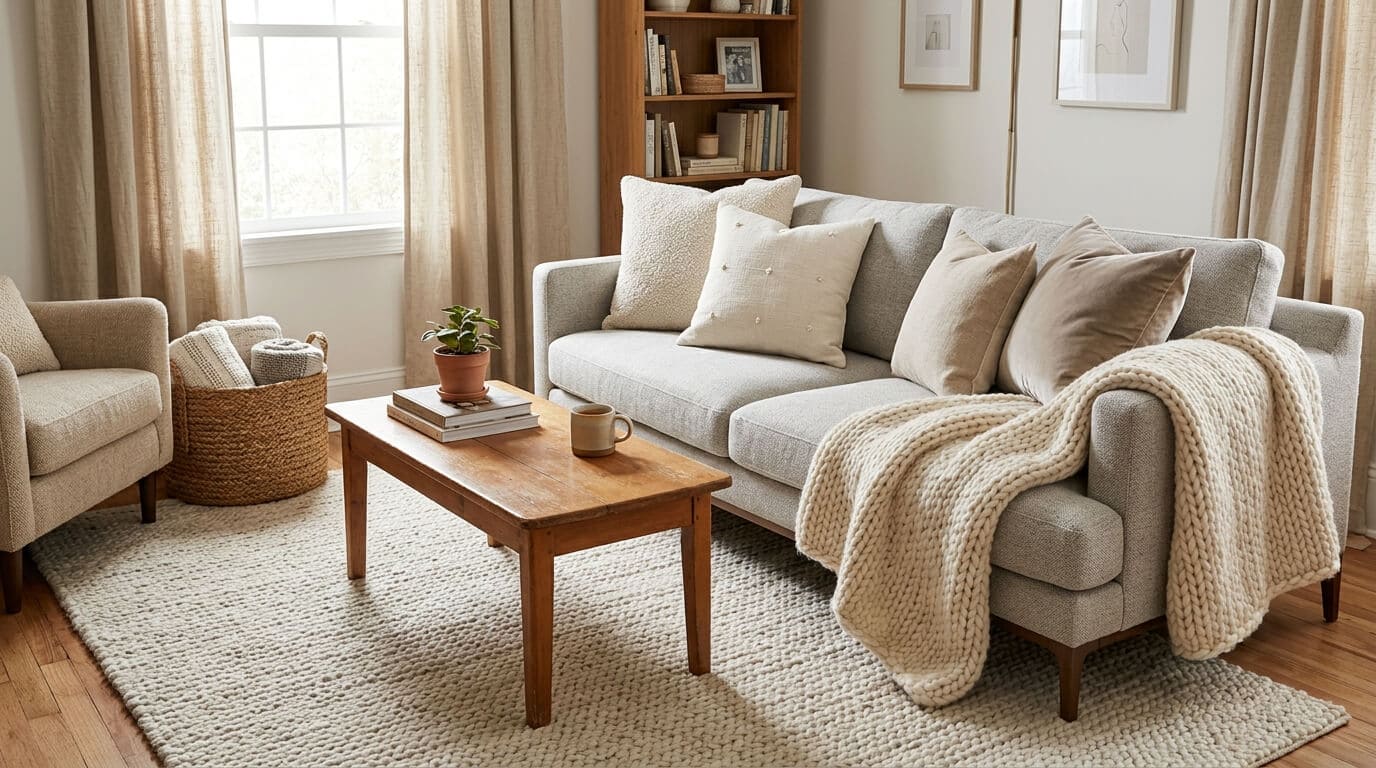
One of the easiest ways to make a living room feel cozy is to introduce different textures instead of relying on one material throughout the room. Start with a textured area rug, then add soft cushions, a knitted or woven throw, and curtains with a little visual weight. These layers make the room feel warmer without requiring major furniture changes. Try combining materials such as: wool or woven rugs, linen curtains, cotton cushions, knitted throws, bouclé or textured upholstery, and natural wood. The key is to mix textures while keeping the overall color palette connected.
2. Use Warm Lighting Instead of Relying Only on Ceiling Lights
Lighting has a major impact on how comfortable a living room feels. Instead of using only one bright ceiling fixture, create several smaller sources of light around the room. A floor lamp beside the sofa, a table lamp on a console, or a small accent light near a reading chair can create a softer atmosphere.
For an especially cozy feeling, use warm-toned bulbs and position the lights at different heights. You can also use lighting to highlight artwork, shelves, or a particular seating area.
3. Choose a Warm and Comfortable Color Palette
Color can instantly change the mood of a living room. For a cozy atmosphere, consider warm neutrals such as cream, beige, taupe, warm white, soft brown, muted terracotta, or earthy green. You don’t need to paint every wall a dark color. Even a warm neutral wall combined with wood, beige upholstery, and earthy accessories can create a comfortable feeling. For more color inspiration, see our Living Room Paint Color Ideas guide. A simple approach is to choose one main wall color, one or two supporting neutrals, and one subtle accent color. This keeps the room cohesive instead of visually busy.

4. Create a Comfortable Seating Arrangement
A beautiful living room won’t feel cozy if the furniture arrangement makes conversation difficult. Instead of pushing every piece of furniture against the walls, create a defined seating area. Position the sofa and chairs so they naturally face toward one another or toward a central coffee table.
A rug can help visually connect the furniture and make the seating area feel more intentional. The goal isn’t simply to fit more furniture into the room — it’s to create a layout where people can comfortably sit, talk, read, and relax. For more layout inspiration, check out our Living Room Furniture Arrangement Ideas guide.
5. Add a Soft Area Rug to Define the Seating Zone
A rug does more than add visual interest. It can make a living room feel noticeably warmer and more comfortable. For a cozy look, choose a rug with some texture and enough size to visually connect the main seating pieces. Avoid choosing a rug that is too small and sits only underneath the coffee table — a larger rug usually creates a stronger connection between the sofa, chairs, and table. If your furniture is neutral, a textured cream, beige, taupe, or subtle patterned rug can add depth without making the room feel busy.

6. Bring in Natural Wood for Warmth
Natural wood is another simple way to make a living room feel warmer. A wooden coffee table, side table, media console, shelving, or even a few smaller wooden accessories can introduce warmth into a neutral space. This works particularly well when the room contains a lot of cool materials such as glass, metal, or gray upholstery.
For a more natural look, choose wood finishes that have visible grain rather than overly glossy surfaces. You can also combine wood with greenery and woven materials for a relaxed, organic atmosphere.
7. Make One Corner a Cozy Reading or Relaxation Spot
You don’t need a separate room to create a relaxing reading area. A comfortable armchair placed near a window, floor lamp, and small side table can turn an unused living room corner into a functional relaxation spot. Add a small stack of books, a soft cushion, and a throw blanket to make the area feel intentional.
If you already have built-in or open shelving, you can position the chair nearby to create a natural reading zone. Our Built-In Shelves Living Room Ideas guide has more ideas for combining storage and display.
8. Soften the Windows With Curtains
Bare windows can sometimes make a living room feel visually hard or unfinished. Soft curtains can add another layer of texture while making the room feel more comfortable and finished. For a relaxed look, consider linen-look, cotton, or softly textured curtains in warm neutral shades. Floor-length curtains can also visually frame the windows and create a softer transition between the windows and the rest of the room. For more inspiration, explore our Living Room Curtain Ideas guide.

9. Use Artwork and Personal Details to Add Warmth
A cozy living room shouldn’t feel like a showroom. Artwork, photographs, books, and a few meaningful objects can give the room personality and make it feel lived in. Instead of filling every surface, choose a few pieces that complement the room’s colors and style. A small gallery wall above the sofa can work particularly well, especially when the frames and artwork share a common color palette. For more wall styling ideas, see our Living Room Wall Decor Ideas guide.
10. Combine Warmth, Texture, and Simplicity — Cozy Living Room Design Ideas in Action
The coziest living rooms usually aren’t the ones with the most decorations. They’re the ones where different elements work together. Combine: comfortable seating, a large textured rug, soft cushions and throws, warm lighting, natural wood, soft curtains, a warm color palette, and a few meaningful decorative pieces. The important part is balance. If everything in the room is soft, textured, and decorative, the space can start feeling cluttered. Leave some visual breathing room so the important elements stand out. A cozy living room should feel comfortable first and decorative second.

How to Make a Living Room Feel Cozy Without Making It Cluttered
Cozy doesn’t mean filling every empty surface. Instead, focus on layers. Start with the largest elements: sofa and seating, area rug, curtains, main lighting, and coffee table. Then add accent lighting, cushions and throws, and artwork and accessories. Then stop when the room feels visually balanced. A useful rule is to leave some empty space around furniture and accessories. This allows the cozy elements to stand out rather than competing with each other.
What Colors Make a Living Room Feel Cozy?
Warm neutrals are an easy starting point, including cream, warm white, beige, taupe, camel, soft brown, terracotta, olive green, and other muted earthy tones. You can also use deeper colors such as charcoal, dark green, or navy as accents. The goal isn’t necessarily to make the room dark — it’s to create a warm and visually comfortable color relationship.
Common Mistakes That Can Make a Cozy Living Room Feel Cluttered
Too many decorative objects A few carefully selected accessories usually work better than covering every surface.
Using only one type of texture If everything is smooth and hard, the room can feel cold. Mix textiles, wood, and other tactile materials.
Choosing a rug that’s too small A tiny rug can make the seating arrangement feel disconnected.
Using only overhead lighting One bright ceiling fixture can make the room feel less relaxed. Add lamps at different heights.
Pushing every piece of furniture against the wall This can make the room feel less connected. Try creating a defined seating zone instead.
Using too many colors Choose a controlled palette and introduce additional colors through small accents.